 By Philipp Noller | AI Expert
The 7 Most Important Trends in AI Development for 2026

Table of Contents
- Introduction: The AI Revolution Accelerates
- Trend 1: Generative AI Goes Mainstream
- Trend 2: Edge AI - Intelligence on End Devices
- Trend 3: AI Ethics and Regulations
- Trend 4: Multimodal AI Systems
- Trend 5: Automation of AI Development
- Trend 6: Personalized AI Experiences
- Trend 7: AI in Healthcare
- AI Development in Numbers
- Outlook: The Future of AI Development
Introduction: The AI Revolution Accelerates
Artificial intelligence continues to evolve at breathtaking speed and is fundamentally changing how companies work, innovate, and grow. In 2026, we face a new wave of breakthroughs in AI development that will transform industries and open up new possibilities.
In this article, we highlight the seven most important trends that will shape the future of AI development and show how companies across various industries can use these technologies to gain competitive advantages and create innovative solutions.
Trend 1: Generative AI Goes Mainstream

Generative AI systems are transforming work processes in media and entertainment and marketing
Generative AI systems have made enormous progress in recent years and will become mainstream across numerous industries in 2026. These technologies can create text, images, videos, and even code that are barely distinguishable from human-created content.
Applications in Business
- Media Production: In the media and entertainment industry, AI-powered tools for content creation and editing are becoming standard. From automated video production to personalized content creation, workflows are being revolutionized.
- Marketing and Advertising: Marketing departments are using generative AI to develop tailored campaigns, optimize copy, and create graphic designs, increasing efficiency and reducing costs.
- Product Development: Companies in the manufacturing industry are adopting generative design tools to develop innovative products and accelerate prototyping processes.
"Generative AI is no longer a vision of the future, but a practical necessity for companies that want to remain competitive in the digital economy." - Dr. Andreas Müller, AI Strategist
Trend 2: Edge AI - Intelligence on End Devices

Edge AI is becoming a game-changer particularly in manufacturing and the automotive industry
Edge AI shifts the processing of AI applications from central servers directly to end devices. This enables faster response times, improved privacy aspects, and the use of AI even in environments with limited connectivity.
Why Edge AI Is Becoming So Important
- Real-time Processing: In the automotive industry, Edge AI allows autonomous vehicles to make decisions in milliseconds without relying on cloud connections.
- Data Privacy: Sensitive data remains on the device, which is particularly important for companies in the healthcare and finance sectors.
- Cost Savings: Reduced data transfers lower bandwidth and cloud storage costs, which means significant savings for production lines with thousands of sensors.
According to a recent study, by the end of 2026, more than 70% of all IoT implementations will include Edge AI components, as companies recognize and leverage the advantages of this decentralized intelligence.
Trend 3: AI Ethics and Regulations

Companies implementing AI ethics guidelines
As AI technologies become more widespread, ethical questions and regulatory requirements are gaining importance. In 2026, we will experience a wave of new guidelines and best practices for responsible AI development.
Important Developments in AI Ethics
- Transparency and Explainability: Companies increasingly need to demonstrate how their AI systems arrive at decisions. This is particularly important for executives in regulated industries such as banking and healthcare.
- Bias Detection and Prevention: Tools for identifying and mitigating biases in AI systems will become increasingly important for large technology companies.
- Governance Frameworks: Structured approaches for managing AI risks are being implemented by governance teams to meet increasing regulatory requirements.
Companies that proactively integrate ethical principles into their AI strategy will not only minimize regulatory risks but also strengthen customer trust.
Trend 4: Multimodal AI Systems

Multimodal systems are revolutionizing customer service and shopping among other areas
While earlier AI models were typically specialized in one data type (text, image, or audio), multimodal systems can process and understand different data types simultaneously - similar to how humans perceive their environment with multiple senses.
Application Examples for Multimodal AI
- Customer Service: Chatbots in customer service will be able to seamlessly interpret text, images, and speech, significantly improving interaction quality.
- Product Search: For the retail sector, multimodal systems enable advanced search and recommendation functions where customers can search for products using images, voice, and text.
- Document Processing: In the financial industry, complex documents with tables, charts, and text can be automatically analyzed and categorized.
"Multimodal AI systems will fundamentally change human-machine interaction and make it more intuitive" - Maria Schneider, Head of Research and Development
Trend 5: Automation of AI Development
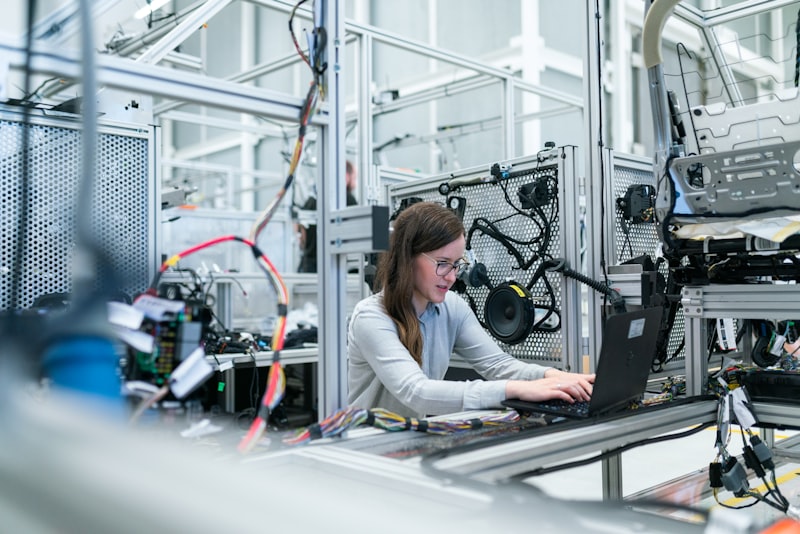
Automated ML pipelines are becoming standard for IT teams across various industries
AI development itself is increasingly being automated by AI. AutoML platforms and no-code tools are democratizing access to AI technologies and significantly accelerating the development process.
Core Aspects of AI Automation
- Automated Feature Engineering: IT departments benefit from tools that can automatically extract relevant features from raw data.
- Hyperparameter Optimization: The time-consuming fine-tuning of model parameters is automated by intelligent systems, increasing the productivity of Research and Development teams.
- End-to-End ML Pipelines: Complete workflows from data ingestion to model deployment are automated, which is particularly advantageous for production processes in manufacturing.
This development has far-reaching implications for businesses: AI projects can be implemented faster, and even departments without deep AI expertise can implement AI solutions.
Trend 6: Personalized AI Experiences
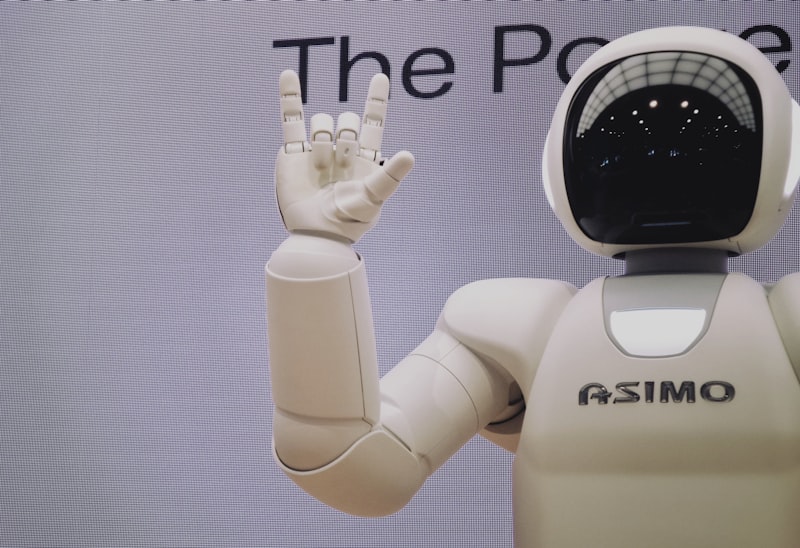
Hyperpersonalization through AI becomes crucial especially in marketing and retail
Hyperpersonalization through AI will reach a new level in 2026. AI systems will be able to gain deep insights into individual preferences and create experiences perfectly tailored to each user.
Industries in the Focus of Personalization
- E-Commerce: Online retailers will offer dynamic product recommendations based on context, mood, and historical behavior.
- Content Platforms: Streaming services in the media and entertainment industry will not only recommend content but also personalize the timing, format, and type of recommendations.
- Education: AI-powered learning platforms in the education industry will create individual learning paths based on learning style, knowledge gaps, and career goals.
Companies that strategically implement personalization can achieve significant increases in customer loyalty, conversion rates, and customer lifetime value.
Trend 7: AI in Healthcare

AI systems supporting diagnoses and treatments in the healthcare sector
The healthcare sector is experiencing a revolution in diagnostics, treatment, and prevention through AI. By 2026, AI applications in the medical field will be mature and widespread.
Important AI Applications in Healthcare
- Precise Diagnostics: AI-powered imaging systems achieve diagnostic accuracy for many diseases that is comparable to or even better than specialist physicians.
- Personalized Medicine: Algorithms analyze genetic profiles and patient data to create tailored treatment plans.
- Preventive Care: Predictive models identify at-risk patients early and enable proactive interventions.
These developments have far-reaching implications for healthcare providers, pharmaceutical companies, and the entire healthcare industry. The integration of AI solutions will lead to better patient outcomes, more efficient processes, and ultimately cost savings.
AI Development in Numbers

AI investments are growing across all industries
Outlook: The Future of AI Development

The path to general AI will be shaped by cross-industry collaboration
AI development will continue to accelerate in the coming years, with significant impacts on business and society. While we have highlighted the seven most important trends for 2026, further innovations are already emerging on the horizon.
Particularly exciting is the progressive convergence of different AI technologies. When generative AI, edge computing, multimodal systems, and automated development tools come together, entirely new use cases become possible that are still difficult to imagine today.
For companies, it will be crucial to develop a clear AI strategy that not only aims at short-term efficiency gains but also considers long-term transformation opportunities. Close collaboration between management, IT and development teams, and business departments will be a key factor for successful AI implementations.
Prepare Your Company for the AI Revolution
Learn how our AI platform connects your company with the right experts to successfully shape your digital transformation - regardless of your industry.
Register as a Company Now Register as an ExpertRelated Articles